In a restaurant or café, the floor does more than provide a walking surface—it’s part of the customer’s sensory experience. From the moment a guest walks in, the floor sets the tone for cleanliness, style, and comfort. It must balance three critical priorities: safety, hygiene, and design.
Unlike residential flooring, restaurant environments demand resistance to heavy foot traffic, spills, grease, and daily cleaning cycles. This is why modern hospitality designers increasingly turn to SPC (Stone Plastic Composite) and MgO (Magnesium Oxide) flooring. These materials combine waterproof durability with anti-slip safety and easy maintenance.
This guide explores practical flooring solutions for restaurants and cafés—covering front-of-house (FOH) vs back-of-house (BOH) needs, design trends, hygiene standards, cost considerations, and real case studies from Karlyn Floors’ global projects.
Front of House vs Back of House Needs
Safety & Anti-Slip Requirements
Safety is paramount. Spilled liquids, oil splashes, and constant movement make foodservice environments prone to slips. Anti-slip ratings (R9–R12) determine surface grip; restaurants typically require R10 or higher for compliance.
SPC and MgO floors meet these standards while maintaining design appeal. Their textured finishes deliver traction even when wet, unlike traditional ceramic tiles that become slippery with oil. ResinCore SPC, for example, achieves an R11 anti-slip rating, combining frictional safety with easy cleaning—making it ideal for dining zones and bar areas.
| Location | Minimum Anti-Slip Rating | Recommended Material |
| Entrance / Lobby | R9 | SPC / ResinCore |
| Dining Area | R10 | SPC / Engineered Wood |
| Kitchen / Prep Zone | R11–R12 | MgO / ResinCore |
| Restrooms | R10 | SPC Waterproof |
| Bar Area | R11 | SPC / MgO Hybrid |
Cleanability & Stain Resistance
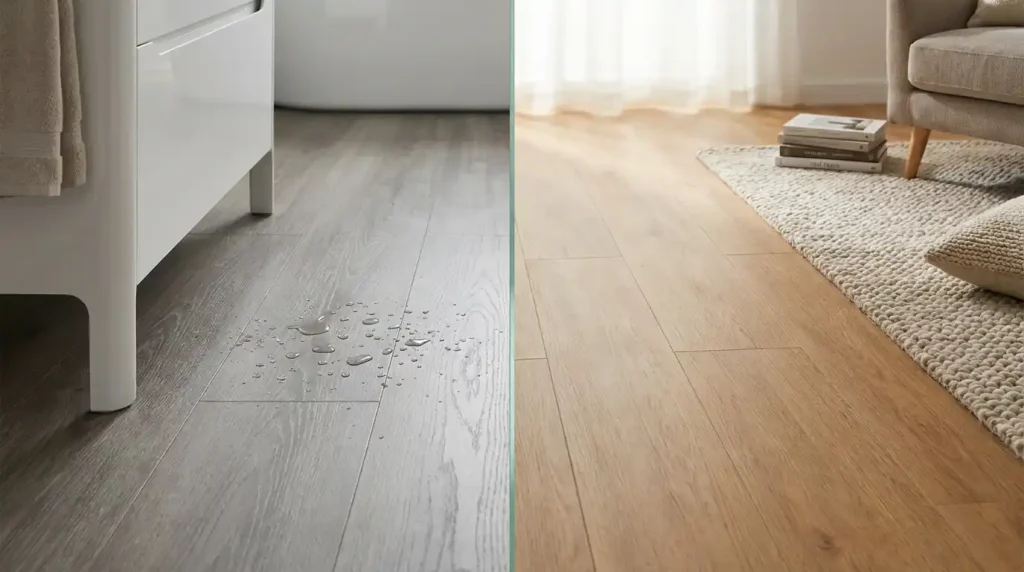
Restaurants are cleaned multiple times daily. Traditional wood floors absorb moisture and stain easily, but SPC’s non-porous surface resists oil, sauces, and acidic liquids. Even red wine or coffee spills can be wiped clean without leaving marks.
Back-of-house flooring benefits from MgO boards, which withstand high heat and moisture from dishwashers and steam ovens. The chemical resistance of MgO also ensures compliance with HACCP hygiene standards.
Comfort & Acoustics
Noise Control & Underfoot Comfort
A noisy restaurant feels chaotic, while soft acoustics encourage longer stays. Flooring significantly affects noise absorption. SPC floors paired with IXPE or EVA acoustic underlays reduce impact sounds by up to 18dB, creating a relaxed ambiance.
Meanwhile, soft resilience underfoot helps staff who stand for long hours—reducing fatigue compared to hard ceramic or epoxy coatings. ResinCore floors, with their flexible structure, balance durability and ergonomics, keeping both customers and staff comfortable.
Temperature & Humidity Management
Thermal comfort also matters. SPC and MgO maintain stable temperatures and are compatible with underfloor heating systems, unlike cold ceramic tiles. This improves energy efficiency and maintains a welcoming indoor climate—especially important in café environments where guests linger longer.
| Performance Factor | SPC | MgO | Laminate | Tile |
| Waterproof | V | V | Limited | V |
| Anti-Slip | R10–R11 | R11–R12 | R9 | R9 |
| Acoustic Rating | ★★★★☆ | ★★★☆☆ | ★★★★☆ | ★★☆☆☆ |
| Comfort | ★★★★☆ | ★★★☆☆ | ★★★★☆ | ★★☆☆☆ |
| Heat Resistance | ★★★★☆ | ★★★★★ | ★★★☆☆ | ★★★★★ |
Compliance & Budget Planning
Health Codes & Safety Certifications
Restaurant flooring must meet local health and building codes. Look for flooring with certifications like GreenGuard Gold, E0 Formaldehyde, and Slip Resistance Certificates (DIN 51130). These guarantee both environmental and safety compliance.
Karlyn Floors’ SPC and MgO lines are certified under CARB Phase II and EU REACH regulations, ensuring zero toxic emissions—an essential factor for spaces handling food and beverages.
Installation Downtime & ROI
Every restaurant renovation is a race against time. SPC’s click-lock floating system allows installation over existing subfloors, cutting renovation time by up to 50% compared to tiles or epoxy coatings.
From a cost standpoint, SPC flooring typically costs USD $45–$70 per m² installed but can last 15–25 years with minimal maintenance—making it more cost-effective over time. MgO floors, though slightly pricier, provide unmatched fire resistance and longevity, perfect for kitchens or bakeries.
Comparison Table: FOH vs BOH Flooring Requirements
| Zone | Key Requirements | Ideal Material | Maintenance Effort |
| Front of House | Aesthetics, acoustic comfort, moderate slip resistance | SPC / ResinCore | Low |
| Back of House | Heat, water, and chemical resistance | MgO | Moderate |
| Bar & Beverage Area | Slip and stain resistance | SPC / MgO Hybrid | Low |
| Entryway | Visual appeal, dirt trapping | SPC with texture | Low |
| Restrooms | Waterproof, hygiene | SPC | Low |
Case Study: Café Chain Reduces Slips by 30%
In 2023, a popular café franchise in Kaohsiung upgraded its interiors using Karlyn Floors’ MgO ResinCore hybrid flooring. The objective was to improve safety and reduce cleaning downtime.
Within three months of installation, employee slip incidents dropped by 30%, and cleaning time decreased by 40% thanks to SPC’s smooth, waterproof surface. The café also achieved LEED Gold certification, crediting low-VOC flooring materials for improved indoor air quality.
Customer satisfaction scores increased notably—guests cited “cozy atmosphere” and “clean environment” as reasons for return visits, validating flooring’s direct link to brand perception and profitability.
FAQs
Q1: Which flooring is best for restaurant kitchens?
MgO or ResinCore hybrid floors are ideal due to heat and moisture resistance.
Q2: Can I use wood flooring in dining areas?
Yes, but opt for engineered wood with UV coating and R10 slip resistance to balance aesthetics and safety.
Q3: Is SPC flooring truly waterproof?
Yes, SPC is 100% waterproof and can handle spills, mopping, and cleaning chemicals without swelling.
Q4: How often should restaurant floors be replaced?
Quality SPC or MgO floors last 15–25 years, depending on traffic and cleaning practices.
Q5: Are Karlyn Floors materials food-safe?
Absolutely. All Karlyn products meet international VOC and hygiene standards suitable for foodservice use.
Create Safe, Stylish Dining Spaces with Karlyn Floors
From cozy cafés to high-traffic restaurants, Karlyn Floors delivers flooring that blends safety, style, and sustainability.
Our SPC, MgO, and ResinCore collections offer waterproof, anti-slip, and hygienic surfaces ideal for commercial kitchens and dining areas.
Visit www.karlynfloors.com to request free samples or book a consultation with our design specialists—build a safer, smarter, and more beautiful restaurant today.