Flooring energy efficiency is a real, if often overlooked, factor in how a building performs — most attention goes to walls, windows, and appliances, but the floor is the largest continuous thermal surface in most rooms, and its material properties genuinely affect indoor temperature and heating or cooling load. The right floor can support more even heat distribution, work with (or against) an underfloor heating system, and influence how much artificial lighting a space actually needs. Whether you’re specifying for a home, office, or hospitality space, flooring is the largest continuous thermal surface in most rooms, which means its material properties matter more than most buyers assume. This article looks at what the physics actually supports, and where the marketing claims around “energy-efficient flooring” tend to outrun the evidence.
The Science Behind Flooring and Thermal Performance
Thermal Conductivity & Insulation Value
Every flooring material has a thermal conductivity value (λ, measured in W/m·K) that determines how readily heat passes through it. A lower λ-value means the material insulates — heat stays where it is. A higher λ-value means heat transfers through more readily, which is actually what you want directly above an underfloor heating system.
Published research on wood-based flooring elements shows thermal conductivity rising with material density, from around 0.09 W/(m·K) for low-density solid wood up to roughly 0.24 W/(m·K) for denser engineered panels — a relationship documented in published flooring thermal conductivity testing based on EN 14342. As a general pattern across flooring categories, denser stone-based and ceramic materials transfer heat fastest, wood-based materials insulate more due to their natural cellular structure, and composite materials like SPC typically sit somewhere in between — though the exact figure depends heavily on the specific core formulation, and generic industry ranges are not a substitute for a product’s own test data.
What Our Own SPC Actually Tests At
Rather than quote an industry range we can’t stand behind for a specific product, here’s what matters: our SPC has been independently tested at a thermal conductivity of 0.122 W/(m·K), with a thermal resistance of 0.048 m²K/W. That’s a genuinely strong result — lower (meaning more insulating) than the broader SPC market typically reports, and closer to the performance range of engineered wood than to a typical stone-plastic composite. For a space with underfloor heating, this combination of composite stability and better-than-typical insulation is part of why we specify it as often as we do. If you want the full test report behind that number, ask — we’d rather you verify it than take our word for it.
Why Ceramic Tile Still Wins Directly Over Radiant Heat
This is a point worth being precise about rather than glossing over for the sake of a tidier sales pitch: for radiant floor heating specifically, ceramic tile remains the technical benchmark. Its high thermal conductivity means it holds and releases heat more readily than wood-based flooring — the same insulating property that makes wood comfortable underfoot works against radiant system efficiency when the floor itself is the heat source.
SPC sits in a genuinely useful middle position here: it’s compatible with underfloor heating when manufacturer-rated for it, and our own tested conductivity figure means it gives up less heating efficiency to tile than a typical SPC product would. If maximizing radiant heating efficiency is the absolute priority, tile remains the technical benchmark; if comfort underfoot and moisture performance matter more than squeezing out the last few percentage points, SPC is a reasonable trade-off — more reasonable than most, based on our own numbers.
Energy Considerations by Climate
Flooring energy efficiency depends heavily on climate and heating system type, which is why the right material shifts depending on what you’re optimizing for.
Cold Climates: Retention Over Reflection
In colder regions, the priority is retaining indoor warmth. Lower-conductivity flooring — engineered wood, or SPC paired with an IXPE underlay — reduces thermal bridging to the subfloor. When paired with underfloor heating, lower-conductivity materials distribute warmth more evenly at the surface, which generally allows occupants to feel comfortable at somewhat lower thermostat settings than with forced-air heating alone, since radiant systems warm occupants and surfaces directly rather than warming air that then escapes through ducts and ventilation — a well-documented characteristic of radiant heating design generally, independent of any one flooring brand’s claims.
Warm Climates: Surface Reflectance
In tropical or arid climates, the relevant lever shifts to surface reflectance rather than insulation. Lighter-toned flooring absorbs less radiant heat at the surface than dark flooring, which can modestly reduce surface temperature in direct sun exposure — a well-established principle behind reflective roofing and paving standards, though the effect on whole-room cooling load from flooring alone is smaller than from roof or wall surfaces, since floors receive less direct solar exposure in most building designs. Where it matters more is perceived thermal comfort underfoot and reduced reliance on artificial lighting, covered below.
Material Structure and Flooring Energy Efficiency by Layer
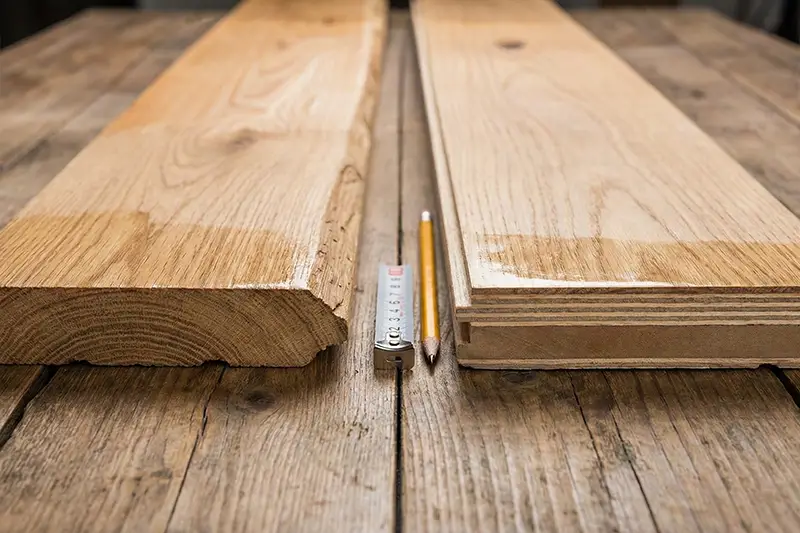
Flooring energy efficiency isn’t determined by the core material alone — modern multi-layer flooring (SPC, laminate, and engineered wood alike) is built from several functional layers, each contributing something different to overall thermal and acoustic performance:
| Layer | Function |
|---|---|
| Wear Layer | Surface durability; lighter finishes reflect more ambient light |
| Decorative Film | Determines color and tone, which affects light reflectance and perceived warmth |
| Core Layer | Primary driver of thermal conductivity and dimensional stability |
| Underlay | Adds a thermal break from the subfloor and reduces impact noise — see our soundproof flooring guide for how this trades off against thermal performance |
Light Reflectance and Lighting Load
Flooring color has a real, if secondary, relationship to lighting energy use. Lighter floors reflect substantially more ambient and artificial light than dark floors, which designers commonly use to reduce the number of fixtures or lower wattage needed to hit a target illuminance in a room — this is standard practice in commercial lighting design, not a flooring-specific claim unique to any one material. Matte finishes absorb more light and retain a warmer visual tone, which tends to suit colder climates aesthetically; glossy finishes reflect more efficiently, which can suit brighter, warmer-climate spaces. The actual energy savings from flooring color choice alone are modest compared to lighting design decisions like fixture type and placement, but it is a free lever worth considering when the rest of the lighting plan is already being finalized.
What Flooring Energy Efficiency Means for Material Selection
None of this makes one flooring material universally “the energy-efficient choice.” The right answer depends on what you’re optimizing for. Where radiant heating efficiency is the absolute priority, tile remains the technical benchmark. When comfort underfoot, moisture resistance, and underfloor heating compatibility all matter together, SPC — particularly ours, given its tested conductivity — is a genuinely strong middle-ground choice rather than just an acceptable compromise. Natural insulation and a warmer underfoot feel tip the balance toward engineered wood instead, when those outweigh squeezing out marginal heating efficiency. For a full comparison of how these materials perform over their working life — not just thermally — our flooring lifespan guide covers the longer-term picture, and our MoistureShield 1000 guide covers where high-density laminate fits into this same decision.
Frequently Asked Questions
Can flooring choice really affect energy bills?
Yes, though the effect is secondary to insulation, windows, and HVAC system efficiency. Flooring’s biggest influence is in how well it works with an underfloor heating system and how much it contributes to or resists heat loss at the building’s largest continuous surface. It is a real factor worth considering, not the primary lever for cutting energy costs.
What’s the best flooring for homes with underfloor heating?
Ceramic tile delivers the best raw thermal transfer for radiant systems, due to its high thermal conductivity relative to wood-based materials. SPC is a strong alternative when a wood-look aesthetic matters — ours specifically has been tested at 0.122 W/(m·K), narrowing the efficiency gap with tile more than a typical SPC product would. Always confirm the specific product’s maximum surface temperature rating before installing over underfloor heating.
Are darker floors less efficient?
Darker floors absorb more light and heat at the surface than lighter floors, which can modestly increase cooling demand in direct-sun areas and reduce how much ambient light a room reflects. The effect is real but secondary — window treatments, glazing, and roof design generally have a larger impact on a building’s cooling load than floor color alone.
How does underlay improve thermal performance?
A foam or cork underlay creates a thin air gap and an additional thermal break between the flooring and the subfloor, reducing heat loss downward. The acoustic benefit is usually the primary reason underlay gets specified, but the thermal contribution is real and compounds with the flooring material’s own conductivity.
Does more energy-efficient flooring cost more upfront?
Not necessarily, and the premium (where one exists) is usually smaller than the difference in material cost between flooring categories generally. The bigger cost driver is typically whether the chosen material is compatible with the heating system already installed, since retrofitting incompatible flooring over an existing radiant system is far more expensive than selecting the right material from the start.
The Bottom Line
Flooring energy efficiency is real but specific: thermal conductivity determines how it performs over underfloor heating, color and finish have a modest effect on lighting load, and insulating materials trade some heating-system efficiency for comfort underfoot. Most of what gets claimed in this space is directional rather than product-specific, which is exactly why we’d rather show you our own tested number — 0.122 W/(m·K) thermal conductivity — than ask you to take a generic industry range on faith. If you’re specifying flooring for a project with underfloor heating or specific thermal performance requirements, we’re happy to walk through whether our data actually fits your brief.