

The EU Deforestation Regulation has been delayed twice, amended once, and debated continuously since it entered into force in June 2023. None of that changes what matters now: for large and medium-sized operators, enforcement begins on 30 December 2026. That date is confirmed by Regulation (EU) 2025/2650 — and for the EUDR flooring supply chain, it is final. There is no indication of a further delay.
For flooring buyers, distributors, and importers who source wood-based products from outside the EU, EUDR flooring compliance is no longer a future planning exercise. It is a current operational requirement with a deadline fewer than one hundred days away. For EU buyers sourcing EUDR flooring, if your supply chain documentation is not in order by the time that deadline passes, you risk shipment refusal, fines, and in serious cases market exclusion.
This guide covers what the regulation actually requires, which flooring products are in scope, what due diligence documentation looks like in practice, and the specific steps that non-EU exporters and EU importers need to take before the enforcement date. I have been working through EUDR compliance for our own product range — teak solid wood flooring and engineered wood flooring — for over a year, and the practical questions are considerably more complex than the regulation’s headline requirements suggest.
What EUDR Flooring Compliance Actually Requires
The EU Deforestation Regulation prohibits the placing on the EU market, or the export from the EU, of specific commodities and products that have contributed to deforestation or forest degradation. For the flooring industry, the relevant commodity is wood. Any product that contains wood and is placed on the EU market must be accompanied by a due diligence statement (DDS) confirming that the wood was not sourced from recently deforested land, and that it complies with the laws of the country of harvest.
“Recently deforested” is defined precisely: land that was forest after 31 December 2020 and has since been converted to agricultural or other non-forest use. This cut-off date applies regardless of when the timber was harvested or when the product was manufactured. A product made from timber legally harvested in 2024 from land that was deforested in 2021 is non-compliant under EUDR — even if the harvest itself was legal under the laws of the country of origin.
The Due Diligence Statement: What It Must Contain
Every operator placing a wood-based product on the EU market must submit a due diligence statement through the EU Information System for EUDR before the product enters the market. The DDS must include the following information for each product:
- Product description, HS code, and quantity
- Country of production (where the timber was harvested)
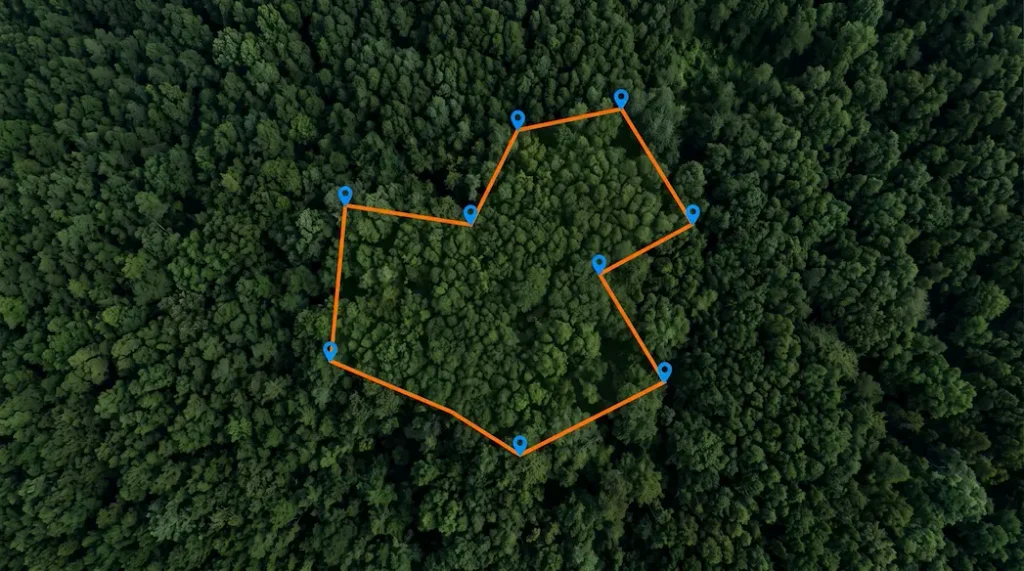
- Geolocation coordinates of all plots of land where the relevant commodity was produced — specifically, the GPS coordinates of the forest plots from which the timber originated
- A statement that due diligence has been carried out and that no or only negligible risk of non-compliance was found
- Name and contact details of the operator submitting the statement
The geolocation requirement is the one that creates the most practical difficulty in flooring supply chains. It requires traceability back to the specific forest plots where the timber was harvested — not just the country of origin, not just the certified forest management unit, but the actual GPS polygon of the harvest area. For flooring products manufactured from timber that passed through multiple processing stages across different countries, establishing and documenting this chain of custody is a significant undertaking.
Who Is the Operator Under EUDR?
Under Regulation (EU) 2025/2650, the primary obligation falls on the “operator” — defined as the person or entity that places the product on the EU market for the first time, or exports it from the EU. In practical terms for the flooring supply chain:
- A non-EU manufacturer selling directly to an EU buyer: the EU buyer is the operator and holds the primary compliance obligation
- An EU distributor importing from a non-EU supplier: the EU distributor is the operator
- A non-EU exporter selling through an EU trading entity: the EU trading entity is the operator
The revised regulation introduced a “downstream operator” category for entities further down the supply chain — retailers, installers, and secondary distributors — who can reference an existing DDS rather than conducting their own full due diligence. This reduces the administrative burden downstream but does not eliminate the obligation: the downstream operator must verify that a valid DDS exists for the product before placing it on the market.
Which EUDR Flooring Products Are In Scope
EUDR flooring scope is determined by the product’s HS code and whether it contains wood as a regulated commodity. Understanding EUDR flooring scope starts with the product’s HS code and whether it contains wood. The following categories are clearly within scope:
| Flooring Product | HS Code Range | EUDR In Scope? | Notes |
|---|---|---|---|
| Teak Solid Wood Flooring | 4409 / 4418 | Yes | Direct wood commodity — highest scrutiny; geolocation to harvest plot required |
| Engineered Wood Flooring | 4412 / 4418 | Yes | Wood veneer top layer and plywood core both in scope; full chain traceability required |
| Laminate Flooring (HDF core) | 4411 / 3918 | Yes | HDF core is wood-derived; wood fibre sourcing must be documented |
| SPC Flooring | 3918 | No | Stone-plastic composite; no wood content — outside EUDR scope |
| ResinCore (Recycled Epoxy Resin) | 3918 | No | No wood content — outside EUDR scope |
The practical implication of this scope is significant. For Karlyn Floors, our teak solid wood flooring and engineered wood flooring are both within EUDR scope and require full due diligence documentation. Our SPC flooring and ResinCore are outside scope entirely, which simplifies their compliance profile considerably for European buyers.
EUDR Flooring and Laminate: The Wood Fibre Traceability Challenge
Laminate flooring presents a particular compliance challenge that is worth addressing directly. The HDF core of a laminate plank is manufactured from wood fibre — typically a mix of softwood and hardwood fibres that have been processed, compressed, and bonded with resin. Tracing the wood fibre in an HDF core back to specific forest plots is technically demanding because the fibre typically originates from multiple sources and passes through industrial processing that obscures its geographic origin.
The practical approach that most laminate manufacturers are taking is to obtain FSC or PEFC chain-of-custody certification for their HDF core material, which provides a documented and audited wood fibre sourcing system that can support EUDR due diligence. An FSC-certified laminate product does not automatically satisfy EUDR — the regulation requires deforestation-free evidence, not just sustainable management certification — but FSC certification significantly strengthens the due diligence case and reduces the risk assessment from “standard” toward “negligible.”
Country Risk Classification: What It Means for Your Supply Chain
The EUDR operates a country benchmarking system that classifies countries as high risk, standard risk, or low risk based on their deforestation rates and governance quality. The risk classification of the country where the timber was harvested — not where the product was manufactured — determines the level of due diligence scrutiny required for any EUDR flooring shipment entering the EU.
As of the most recent classification published in 2025, only four countries were designated high risk: Belarus, Myanmar, North Korea, and Russia. The vast majority of timber-producing countries, including those in Southeast Asia, South America, and Africa, were classified as standard risk. This classification is subject to annual review and can change — a country that is standard risk today may be reclassified as high risk in the next review cycle if deforestation rates increase or governance deteriorates.
Standard Risk Does Not Mean No Due Diligence
A common misconception in the industry is that sourcing from a standard-risk country reduces or eliminates the EUDR due diligence obligation. It does not. Standard risk means that the due diligence process is the baseline — collect the documentation, assess the risk, submit the DDS. High risk means additional scrutiny and a higher evidence threshold. Low risk, once that category is operationalised, will allow simplified procedures. But standard risk requires full compliance, and the geolocation data requirement applies regardless of the country’s risk classification.
For buyers sourcing teak or tropical hardwood from Southeast Asia — Myanmar being a specific case — the country risk classification is a direct commercial consideration. Teak sourced from Myanmar is a high-risk origin under EUDR, and the due diligence burden for that origin is substantially higher than for teak sourced from other origins. Buyers who have been sourcing from Myanmar need to assess whether the compliance infrastructure exists to support continued sourcing, or whether origin diversification is the more practical path. Our teak flooring guide covers origin sourcing and CITES considerations in detail.
Geolocation Data: The Practical Reality
The geolocation requirement is the aspect of EUDR that creates the most operational difficulty, and the one where the gap between regulatory intent and supply chain reality is widest. The regulation requires GPS coordinates — either a point or a polygon — for the plots of land where the timber was harvested. For plantation timber from large, organised forestry operations, this data is often available from existing forest management systems. For timber sourced from smallholders, community forests, or fragmented supply chains across multiple countries, obtaining verified geolocation data requires either direct engagement with the harvest source or reliance on intermediary verification systems.
Tools such as Google Earth can be used to generate and verify GPS polygon coordinates for harvest plots, providing a practical starting point for geolocation documentation. The coordinates must ultimately be submitted through the EU EUDR Information System in the format the platform requires — but the underlying mapping work can be done with satellite imagery tools that most supply chain teams already have access to.
EUDR Compliance Timeline: What Needs to Happen Before 30 December 2026
With enforcement fewer than one hundred days away at the time of writing, the window for preparation is short. The following table sets out the key steps for both EU importers and non-EU exporters of wood-based flooring products, with realistic timeframes.
| Action | Who Is Responsible | Deadline | Notes |
|---|---|---|---|
| Identify all in-scope products by HS code | EU importer / non-EU exporter | Immediately | Confirm which products contain wood and fall within EUDR commodity scope |
| Request geolocation data from supply chain | EU importer (via non-EU supplier) | October 2026 | GPS coordinates for harvest plots; allow time for supplier response and verification |
| Conduct risk assessment for each product origin | EU importer | November 2026 | Assess deforestation risk using country classification, geolocation data, and certification evidence |
| Register on the EU EUDR Information System | EU importer (operator) | November 2026 | Account registration required before DDS can be submitted |
| Submit Due Diligence Statements | EU importer (operator) | Before 30 December 2026 | One DDS per product shipment; reference number must accompany the goods |
| Prepare documentation package for customs | EU importer / non-EU exporter | Before first post-deadline shipment | DDS reference number, certificate of origin, FSC/PEFC certificates if applicable |
How to Actually Submit a Due Diligence Statement
The DDS is submitted through the EU EUDR Information System, an online platform operated by the European Commission. Registration is required before the first submission — operators need an EU Login account linked to their company’s legal entity. Allow several business days for account verification; do not leave this until the week before your first post-deadline shipment.
Each DDS covers one product type per shipment. If a single container includes teak flooring and engineered wood flooring, two separate DDS submissions are required. Once submitted and validated, the system generates a unique DDS reference number that must accompany the shipment through customs. Without that reference number, the goods cannot be cleared. For EUDR flooring shipments, this reference number becomes as essential as the certificate of origin or the commercial invoice.
What Non-EU Exporters Need to Provide
While the primary legal obligation under EUDR falls on the EU operator, non-EU exporters of wood-based EUDR flooring bear a significant practical burden in supplying the documentation that makes compliance possible. An EU importer cannot submit a credible due diligence statement without accurate information from their supplier. In practice, this means non-EU exporters need to prepare and maintain the following:

Documentation Package for EUDR-Compliant Wood Flooring
At minimum, a non-EU exporter of wood-based flooring products destined for the EU market should be able to provide, for each product and shipment:
- Geolocation data for harvest plots: GPS coordinates (point or polygon) for the forest areas from which the timber originated, in a format compatible with the EU EUDR Information System. If the timber passed through intermediary processors, geolocation data from each relevant stage of the supply chain.
- Proof of legal harvest: Documentation confirming that the timber was legally harvested under the laws of the country of origin — logging permits, harvesting licences, or equivalent official documentation.
- Chain of custody documentation: Records linking the harvested timber through each processing stage to the finished flooring product. For certified products, FSC or PEFC chain-of-custody certificates with current validity.
- Deforestation-free declaration: A supplier declaration confirming that the timber did not originate from land deforested or degraded after 31 December 2020.
- Species identification: Scientific name (genus and species) for each timber species used in the product. For teak, this is Tectona grandis. For engineered wood, the species of the veneer layer and the core material must both be identified.
The depth of documentation required is substantially greater than what most wood flooring exporters have been maintaining for EUTR (EU Timber Regulation) compliance. EUTR required operators to exercise due diligence and maintain records, but it did not require geolocation data or the same level of species and origin specificity. Exporters who have been relying on their EUTR compliance systems as a foundation for EUDR compliance will need to augment those systems significantly.
The Consequences of EUDR Flooring Non-Compliance
EUDR non-compliance carries penalties that are designed to be proportionate to the economic benefit of the non-compliant activity. Under Article 25 of the regulation, member states are required to impose penalties that are effective, proportionate, and dissuasive. The specific penalties are set at member state level, but the regulation establishes minimum requirements:
- Fines of at least four percent of the operator’s annual turnover in the EU, or up to twice the value of the products involved
- Confiscation of the non-compliant products
- Temporary exclusion from public procurement processes
- Temporary prohibition from placing products on the EU market
Beyond the formal penalties, the commercial consequences of non-compliance may be more immediately damaging. A shipment that cannot be cleared at customs because the EUDR documentation is incomplete or missing creates immediate operational disruption — port storage costs, delayed project timelines, and in worst cases rejected shipments that must be returned or destroyed. In a market where EU buyers are under increasing pressure from their own clients and investors to demonstrate supply chain sustainability, a supplier who cannot produce EUDR-compliant documentation is a liability, not just a compliance risk.
EUDR and FSC: Complementary, Not Interchangeable
The relationship between EUDR and existing forest certification systems — particularly FSC and PEFC — is one of the most frequently misunderstood aspects of the regulation. FSC certification is a market-based voluntary standard that verifies responsible forest management and chain of custody. EUDR is a legal regulatory requirement that mandates deforestation-free sourcing. The two systems address overlapping concerns but are not substitutes for each other.
FSC certification provides strong evidence for the due diligence assessment — a product with a valid FSC chain-of-custody certificate has been verified by an accredited certification body to have maintained documented custody from a certified forest source to the finished product. This evidence supports a “negligible risk” finding in the EUDR due diligence process. However, FSC certification alone does not fulfil the EUDR obligation because it does not automatically provide the geolocation data that the regulation requires to be submitted in the DDS.
The practical implication is that FSC-certified suppliers are in a significantly better compliance position than uncertified suppliers — the certification infrastructure provides much of the traceability backbone that EUDR requires — but they still need to ensure that geolocation data is extracted from that system and made available for DDS submission.
Frequently Asked Questions About EUDR Flooring Compliance
Does EUDR apply to SPC flooring?
No. SPC (Stone Plastic Composite) flooring does not contain wood and is outside the scope of EUDR. The regulation applies to products that contain wood as a commodity — solid wood flooring, engineered wood flooring, and laminate flooring with wood-based HDF cores are all within scope. SPC flooring, which uses a limestone and PVC composite core with no wood content, is not subject to EUDR requirements. If you are an EU importer sourcing SPC flooring, no due diligence statement is required for EUDR purposes, though other documentation requirements such as CE marking under EN 14041 still apply.
What is the deadline for small and micro enterprises?
Under Regulation (EU) 2025/2650, micro and small enterprises — defined as EU operators with annual turnover below €8 million and fewer than 50 employees — have until 30 June 2027 to comply. This concession applies to the EU importer’s classification, not the non-EU exporter’s size. A small EU importer sourcing from a large non-EU manufacturer still qualifies for the extended deadline. However, even small operators should begin documentation preparation now, because the geolocation and chain-of-custody data they need must come from their suppliers — and those suppliers are dealing with multiple buyers simultaneously. Waiting until early 2027 to start the conversation with your suppliers is a risk.
Can existing FSC certification satisfy EUDR flooring compliance requirements?
FSC certification significantly supports EUDR compliance but does not by itself satisfy all requirements. A valid FSC chain-of-custody certificate provides strong evidence for the due diligence risk assessment and reduces the deforestation risk finding toward negligible. However, the EUDR due diligence statement requires geolocation data — GPS coordinates for harvest plots — that FSC certificates do not automatically include in a format ready for DDS submission. FSC-certified suppliers are in a better starting position than uncertified suppliers, but additional steps are required to extract and format the geolocation data for EU Information System submission.
What happens if my supplier cannot provide geolocation data?
If your supplier cannot provide verified geolocation data for the timber harvest plots, you cannot complete a EUDR due diligence statement that meets the regulation’s requirements. In that situation, you have three options: work with your supplier to obtain the data (which may require them to engage further back in their own supply chain), switch to an alternative supplier who can provide the required documentation, or source products that are outside EUDR scope — such as SPC flooring — where the compliance burden does not apply. Submitting a DDS with incomplete or unverified geolocation data is not an acceptable workaround; it exposes the operator to the same penalties as non-submission.
Is there still time to achieve compliance before the December 2026 deadline?
For large and medium-sized operators, yes — but the window is narrow. The critical path item is geolocation data from the supply chain, and obtaining, verifying, and formatting that data takes time. Operators who have not yet begun their EUDR preparation should initiate supplier conversations immediately, focus first on their highest-volume and highest-risk product lines, and prioritise products where the supply chain is shortest and most transparent. Products with existing FSC or PEFC chain-of-custody certification are the easiest starting point. For comprehensive support on EUDR compliance documentation for wood-based flooring sourced through Karlyn Floors, contact our team directly — we have been building our EUDR documentation infrastructure for over a year and can provide supplier-level documentation to support your due diligence process.
Where to Go From Here
EUDR flooring compliance is not a one-time documentation exercise. It is an ongoing operational requirement that will affect every EUDR flooring shipment entering the EU market from 30 December 2026 onwards. The companies that manage this transition most effectively will be the ones that treat it as a supply chain infrastructure investment rather than a paperwork burden — building the traceability systems, supplier relationships, and documentation processes that make compliance routine rather than reactive.
The European Commission’s official EUDR information page remains the authoritative source for regulatory updates, country risk classifications, and EU Information System access. Given the regulation’s history of amendments, monitoring this page for updates between now and the enforcement date is advisable.
For flooring buyers who are sourcing through Karlyn Floors, we are actively preparing EUDR compliance documentation for our wood-based product lines — teak solid wood flooring and engineered wood flooring — and can provide supplier-level documentation packages to support your due diligence process. For products outside EUDR scope, including our SPC flooring and ResinCore, no additional documentation is required beyond standard CE compliance. We are happy to clarify the compliance status of any product in our range. Get in touch with our team here.