
The Quiet Return of a Category Everyone Wrote Off
A few years ago, the flooring industry narrative was clear: SPC was the future, and laminate flooring was on its way out. The logic seemed sound. SPC is fully waterproof, dimensionally stable, and increasingly affordable. Laminate has a moisture-sensitive HDF core that fails in wet environments. The conclusion most people drew was obvious — why specify laminate when SPC does everything better?
That narrative is now running into a structural problem: SPC’s raw material costs are rising, and they are rising for reasons that are unlikely to resolve quickly. At the same time, this product category has not stood still. Higher-density core technology has addressed the most common moisture complaint. The result is a category that is experiencing a quiet but real recovery in specification volumes — and understanding why it is happening matters whether you are a distributor, a contractor, or an architect evaluating options for a 2026 or 2027 project.
This article is not a pitch for one product over another. Both have legitimate roles in a well-considered specification, and I will be honest about where laminate still falls short. But the structural shift happening in this category right now is worth understanding clearly, because it is changing the cost calculus in ways that will affect sourcing decisions for the next two to three years at minimum.
The Oil and PVC Story Behind Rising Laminate Flooring Demand
SPC flooring’s core is composed of approximately 60% limestone powder and PVC — polyvinyl chloride — as its binding matrix. PVC is a petroleum-derived polymer, which means its production cost tracks crude oil prices with a meaningful lag. When oil prices rise or become structurally volatile, PVC costs follow, and SPC manufacturers absorb that pressure before passing it downstream to distributors and buyers.
Geopolitical Instability as a Structural Cost Driver
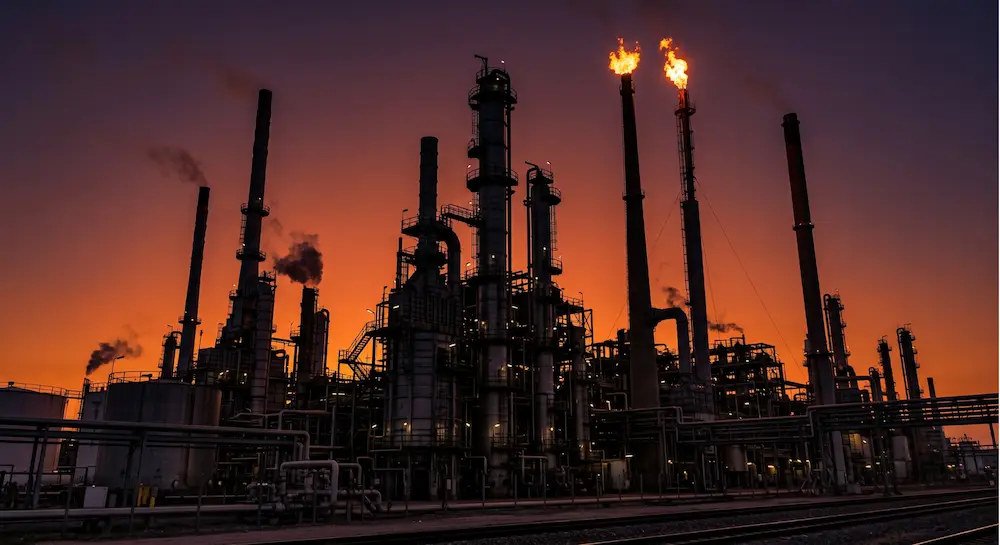
The Strait of Hormuz — the narrow waterway between Iran and Oman through which approximately 20% of global oil and LNG previously transited — has been severely disrupted since military operations began in late February 2026. Commercial shipping through the strait dropped sharply after the conflict began, with knock-on effects across global energy markets. Crude oil price volatility since February has been significant, and PVC feedstock costs have reflected that volatility with the typical lag of several weeks to two months.
This is not a short-term spike that will resolve cleanly. The geopolitical factors driving Hormuz instability — US-Iran relations, regional alliance dynamics, and the broader energy security concerns of major importing nations — are structural rather than episodic. Even if a ceasefire stabilises the immediate situation, the market has already priced in a sustained risk premium on oil and oil-derived materials that was not present two years ago. For SPC manufacturers whose core raw material is a petroleum derivative, this is a cost environment that is fundamentally different from the one in which SPC’s competitive pricing advantage was established.
What This Means for Laminate Flooring’s Competitive Position
The practical consequence for buyers is straightforward: SPC flooring that was priced at a modest premium over quality laminate products eighteen months ago is now priced at a larger premium — and that gap is likely to widen rather than narrow in the near term. The IEA’s July 2026 Oil Market Report confirms that global oil supply remains well below pre-conflict levels, with PVC feedstock pricing continuing to reflect this structural disruption — a dynamic worth monitoring for any buyer planning large-scale flooring procurement over the next twelve to twenty-four months.
For buyers who specified SPC across large commercial projects primarily on a cost-per-square-metre basis rather than on a genuine waterproofing requirement, the equation is changing. SPC remains the correct specification for genuinely wet environments. But for the substantial proportion of SPC volume being installed in dry commercial spaces — offices, retail, corridors, school classrooms — simply because it was affordable and waterproof, the cost advantage over laminate is eroding.
What This Category Actually Does Well — and Why It Still Matters
The anti-laminate narrative of the past several years focused heavily on its moisture vulnerability, which is a real and legitimate concern. But in the process, it obscured a set of genuine performance advantages that laminate retains over SPC in specific applications — advantages that become more commercially relevant as the price gap narrows.
Acoustic Performance and Underfoot Comfort
The HDF core in this category provides meaningful acoustic mass that SPC’s denser but thinner stone-plastic core does not always match without an underlay. In multi-residential applications, school classrooms, and open-plan offices — where impact sound transmission between floors is a genuine occupant comfort issue — laminate with a quality underlay has historically outperformed SPC on acoustic metrics. ISO 10140-3 impact sound insulation testing provides the benchmark framework that acoustic consultants reference when evaluating floating floor systems. As acoustic performance becomes an increasingly specified requirement rather than an afterthought, this advantage is worth quantifying rather than dismissing. Our MoistureShield 1000 laminate, with its 1000 kg/m³ HDF core, provides particularly strong acoustic mass for a floating floor system.
Design Range and Surface Authenticity
The printed surface technology in this category has advanced significantly over the past decade. Embossed-in-register surface treatments — where the texture of the surface precisely matches the printed grain pattern beneath it — now produce a tactile and visual result that many buyers find more convincing than equivalent SPC products at comparable price points. EN 13329:2023, the European laminate flooring standard, includes abrasion resistance classification that helps buyers evaluate surface durability independently of marketing claims. For retail, hospitality, and residential applications where design authenticity matters as much as performance, this is a meaningful differentiator. The surface of a quality laminate flooring product in a wide-plank oak or walnut format can be genuinely difficult to distinguish from engineered wood at first glance — something that cannot be said as confidently for most SPC alternatives at similar price points.
Installation Familiarity and Trade Acceptance
This floor type has been installed by contractors globally for over two decades. The installation knowledge base — subfloor preparation requirements, expansion gap management, underlay selection, transition detailing — is deeply embedded in the trade. SPC, despite its technical advantages, introduced different installation characteristics (particularly around thermal expansion management with its rigid core) that required contractor retraining. As laminate’s cost competitiveness improves relative to SPC, many contractors are finding themselves returning to a product they know well and can install efficiently without the learning curve that premium rigid core products sometimes demand.
The Moisture Problem — and What High-Density Core Technology Changes
The primary argument against laminate flooring in the SPC era was moisture vulnerability: standard HDF cores at 600–800 kg/m³ absorb ambient humidity, swell at the edges, and fail at joints when exposed to sustained moisture. This is a real limitation and it is not resolved by surface treatments alone — the issue is the core’s porosity, not the wear layer’s waterproofing. The US EPA notes that moisture in flooring systems is a primary driver of mould growth, reinforcing why core moisture performance matters beyond just the surface.
Why Standard Laminate Fails in Humid Environments
Standard laminate’s moisture failure mechanism is well understood. The wood-fibre HDF core is hygroscopic — it absorbs moisture from the ambient environment at the molecular level, regardless of whether liquid water is present at the surface. In high-humidity environments, even without any spills or surface water exposure, standard laminate cores will gradually absorb ambient moisture, causing dimensional change that manifests as edge lifting, joint gapping, and eventually surface delamination. This is why standard laminate has been correctly excluded from kitchen, bathroom, basement, and tropical climate specifications for years.
What 1000 kg/m³ Core Density Actually Changes
MoistureShield 1000 addresses this failure mechanism directly through core density rather than surface treatment. At 1000 kg/m³ — significantly denser than the 600–800 kg/m³ standard — the HDF core has substantially lower porosity, which means lower moisture absorption rates and dramatically better dimensional stability under humidity exposure. The result is a laminate flooring product that can be specified in kitchens, school classrooms, large commercial spaces, and humid-climate residential applications where standard laminate would not be appropriate. It is not a substitute for SPC in genuinely wet rooms — that distinction remains important and honest — but it extends laminate’s viable specification range into the moderate-humidity environments that account for a large proportion of the commercial flooring market.
For buyers evaluating the SPC-versus-laminate decision in the current cost environment, MoistureShield 1000 effectively creates a third option: a product with laminate’s cost profile and design range, and moisture resistance meaningfully better than standard laminate, at a price point that reflects the widening gap between SPC and laminate raw material costs. Explore the full specification at our MoistureShield 1000 product page.

| Criteria | Standard Laminate | MoistureShield 1000 | SPC Flooring |
|---|---|---|---|
| Core Density | 780–850 kg/m³ | 1000 kg/m³ | ~2,100 kg/m³ |
| Moisture Performance | Surface resistant only | High resistance | 100% waterproof |
| Humid Climate Suitability | Not recommended | Good | Excellent |
| Wet Room Suitability | No | Dry zones only | Yes |
| Acoustic Performance | Good with underlay | Very good with underlay | Moderate |
| Relative Cost (2026) | Lowest | Low–Mid | Mid–High (rising) |
| Refinishable | No | No | No |
Where It Makes Sense in a 2026 Specification
This comeback is not universal — it is specific to the applications where its genuine advantages align with the current cost environment. Here is an honest read of where laminate belongs in a 2026 specification and where it does not.
Strong Specification Cases for Laminate in 2026
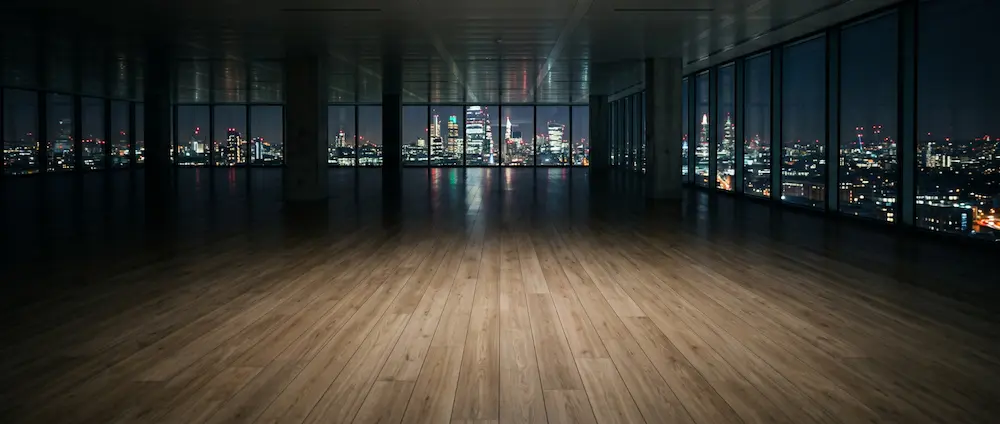
Dry commercial spaces — offices, retail environments without food or beverage service, corporate lobbies, school corridors in moderate climates — represent the strongest specification case for quality laminate in the current environment. These spaces do not have a genuine waterproofing requirement; the SPC specification in these environments was primarily driven by cost and availability rather than technical necessity. As SPC’s cost advantage erodes, the design range and acoustic performance of quality laminate become genuinely competitive again.
Large-scale rental residential projects — where the cost-per-square-metre calculation is applied across hundreds or thousands of units — are also experiencing a meaningful shift back toward laminate. The mathematics of large-scale specification amplify the per-square-metre price difference between SPC and laminate significantly. For a 500-unit residential development specifying flooring across living areas and bedrooms — with SPC specified separately only in kitchens and bathrooms — the total project cost difference can be substantial, and that difference is growing as PVC costs rise. LEED materials credits also recognise low-emitting flooring products, which quality laminate with CARB Phase II certification can qualify for — an additional consideration for developers pursuing green building certification on large residential projects.
Where Laminate Still Does Not Belong
The honest counterpoint is equally important. Bathrooms, wet-zone kitchen areas, basements with moisture migration risk, and any tropical or coastal climate application with sustained high ambient humidity remain outside the appropriate specification range for standard products in this category — and even MoistureShield 1000, for all its density advantages, is not a substitute for SPC in genuinely wet environments. This comeback is a story about dry and moderate-humidity spaces, not a story about laminate replacing SPC across the board. Buyers who misread this distinction and specify laminate in moisture-present environments will encounter the same failure modes that drove laminate out of those applications in the first place. Our detailed comparison at SPC vs Laminate Flooring covers the technical boundary between the two products in full.
| Application | Standard Laminate | MoistureShield 1000 | Recommended Instead |
|---|---|---|---|
| Dry offices and retail | Yes | Yes | — |
| School classrooms (moderate climate) | With care | Yes | — |
| Large-scale rental residential (dry zones) | Yes | Yes | — |
| Kitchens | No | With perimeter sealing | SPC for wet zones |
| Bathrooms | No | Dry zones only | SPC or ResinCore |
| Basements | No | Low moisture risk only | SPC |
| Tropical / coastal climate | No | With caution | SPC or ResinCore |
Frequently Asked Questions About This Flooring Category in 2026
Is laminate flooring really making a comeback, or is this just marketing?
The recovery is structural, not marketing-driven. The underlying cause is the rising cost of PVC — a petroleum-derived polymer that forms a key component of SPC’s core. As oil price volatility increases, driven in part by ongoing geopolitical instability around the Strait of Hormuz, PVC feedstock costs rise with a lag of several weeks to two months. SPC manufacturers pass this cost pressure downstream, narrowing the historical price advantage that SPC held over quality laminate products. The shift back toward laminate in certain specification categories is a direct response to this changing cost environment, not a trend manufactured by laminate suppliers.
What is the difference between standard laminate and MoistureShield 1000?
The core difference is HDF density. Standard products in this category use cores at 600–800 kg/m³, which have relatively high porosity and will absorb ambient moisture in sustained humid conditions, leading to swelling and joint failure. MoistureShield 1000 uses a 1000 kg/m³ HDF core — significantly denser and less porous — which resists the moisture absorption mechanism that causes standard laminate to fail in moderate-humidity environments. The practical result is a product that can be specified for kitchens, school classrooms, and humid-climate commercial spaces where standard laminate would not be appropriate, while maintaining the laminate cost profile and design range that is increasingly competitive in the current raw material environment.
Should I switch from SPC to laminate for my next project?
Not universally — but potentially for specific applications. If your project involves dry commercial spaces, large-scale residential dry zones, or any environment where a genuine waterproofing requirement does not exist, it is worth re-evaluating the SPC-versus-laminate cost comparison with current pricing rather than pricing from eighteen months ago. The gap has changed meaningfully. If your project involves wet rooms, basements, or humid tropical climates, SPC remains the correct specification regardless of the cost environment. The honest answer is that this is a specification-by-specification decision, not a blanket switch.
Will SPC costs come down again, making laminate less competitive?
Possibly, but the timeline is uncertain and the structural drivers are unlikely to resolve quickly. Oil price stabilisation would reduce PVC feedstock costs, but the geopolitical factors behind current volatility are not short-term episodes. Even if prices moderate, the market has repriced the risk premium on petroleum-derived materials in a way that will not simply unwind when a ceasefire holds for a few weeks. For project planning purposes over the next twelve to twenty-four months, it is safer to evaluate specifications against the current cost environment rather than assuming a return to the SPC pricing of 2023 or 2024.
Where can I see the full technical specifications for MoistureShield 1000?
The complete technical specification, including core density, moisture resistance data, acoustic performance with underlay, and available dimensions, is on our MoistureShield 1000 product page. Certification documentation — including formaldehyde emission test reports and fire classification certificates — is available through our Certificates and Patents page. For project-specific specification consultations, contact our team through our Contact page.
The Bottom Line: A Changed Cost Environment
This comeback is not a product story. It is a raw material economics story. PVC costs are rising because oil markets are under structural pressure, and that pressure is changing the relative cost position of SPC and laminate in ways that have real implications for specification decisions across commercial, institutional, and large-scale residential projects.
The honest read is this: this category deserves reconsideration in dry and moderate-humidity applications where its cost advantage is now meaningful again, and where its acoustic performance and design range offer genuine value. MoistureShield 1000 extends that reconsideration into moderate-humidity environments that standard laminate cannot reach. SPC remains the correct specification for wet rooms, basements, and humid tropical climates — nothing about the current cost environment changes that technical reality.
What has changed is the calculation for the large volume of commercial and residential flooring that goes into dry spaces — the offices, classrooms, corridors, and living areas that do not have a genuine waterproofing requirement but have been specifying SPC by default for the past several years. In those spaces, the cost environment of 2026 makes laminate worth looking at again. If you are evaluating specifications for projects in this category, our team is available through our Contact page to discuss the current cost picture and the right product for your specific application. You can also explore our full laminate range at karlynfloors.com/laminate-flooring and compare options at SPC vs Laminate Flooring.