Why Hannover Still Sets the Global Flooring Agenda
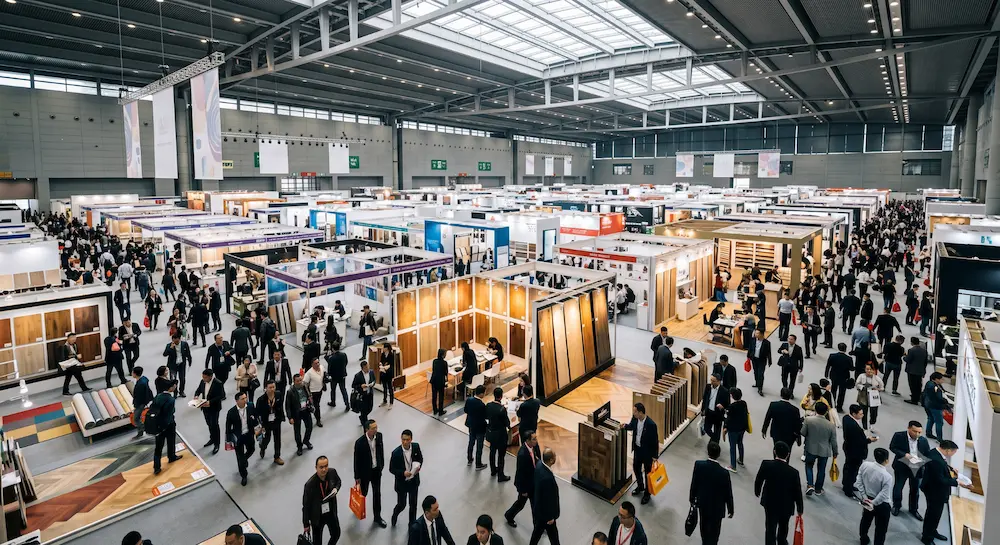
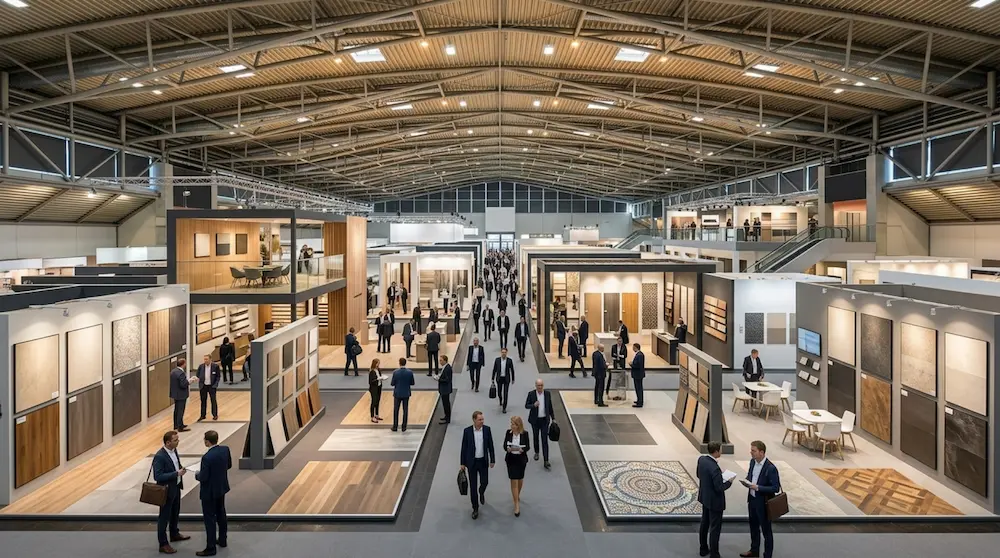
Every two years, the flooring industry gathers in Hannover — and this edition was particularly worth attending. For the first time in its history, DOMOTEX 2026 repositioned itself as the Home of Flooring and Interior Finishing, expanding beyond floor coverings into walls, ceilings, acoustic solutions, paints, wallpapers, and sun-shading systems. Over 500 exhibitors from more than 50 countries participated across four days, January 19 to 22, at the Hannover Exhibition Grounds, under the theme “Creating Rooms. Transforming Spaces.”
I was there as part of the Karlyn Floors team, walking the halls with a specific question in mind: what does the European design and regulatory agenda look like in 2026, and what does it mean for the buyers, architects, and distributors we work with across Asia? Europe has long functioned as a leading indicator for the global flooring market — standards that become mandatory in Germany or the Netherlands tend to arrive in Taiwan and Southeast Asia within two to four years. Watching what European specifiers demand today tells you what your clients will demand tomorrow. This article is our honest debrief: the trends that dominated every serious conversation, how different product categories performed through the European lens, and what it means for flooring decisions in 2026 and 2027.
How Hannover Reinvented Itself — and Why It Matters
The structural change at this year’s show deserves attention before any trend discussion, because it reveals where the European market is heading.
From Flooring Fair to Interior Finishing Platform
A DOMOTEX 2024 visitor survey found that 42 percent of participants were already interested in products beyond the flooring industry. Deutsche Messe responded by adding six new product groups: ceramic tiles, wall and ceiling elements, paint and wallpaper, outdoor applications, shading, and acoustics. The result is a fair where an architect can evaluate a teak parquet floor, compare acoustic ceiling panels, and specify an entire room in a single venue. This is how professional specifiers actually work — they think in rooms, not product categories — and the fair finally caught up with that reality.
The commercial implication for flooring suppliers: buyers at DOMOTEX 2026 were evaluating how a floor interacts with the ceiling, walls, and acoustic environment, not just the floor’s own properties. A beautiful floor that creates unacceptable reverberation in an open-plan office is no longer a viable specification, regardless of aesthetics.
The Biennial Rhythm Raises the Stakes
The next DOMOTEX will not take place until January 2028, which means the trends and product directions visible at this edition will shape European specification decisions for two full years. For Asian suppliers and distributors, this creates a stable planning horizon — and higher stakes for missing the signal. Products aligned with what European specifiers wanted at the show have a two-year runway of relevance; products absent from the conversation face two years of headwinds before the next opportunity to reposition.
Three European Signals From DOMOTEX 2026 That Will Reach Asia by 2027
Three themes came up so consistently across four days that I stopped treating them as trends and started treating them as established facts about the European market.
Signal One: Natural Materials Are Undergoing a Technical Upgrade
The narrative around solid and engineered wood at the show was not nostalgic. European buyers are not choosing natural materials despite their technical limitations — they are choosing them because manufacturers have solved those limitations while preserving the aesthetic. UV-cured treatments that keep the grain and warmth of teak while delivering synthetic-grade scratch resistance. Cross-laminated engineered cores that perform under underfloor heating. FSC-certified sourcing that lets architects specify genuine hardwood without compromising green building credentials.
For our Teak Solid Wood Flooring, this trend is directly relevant. Premium Burmese teak’s natural oil content — the source of its moisture and pest resistance without chemical treatment — is increasingly positioned as a feature, not a legacy attribute. Buyers at the luxury residential and boutique hospitality tier were seeking genuinely natural materials with documented FSC provenance, not wood-look synthetics. Similarly, our Engineered Wood Flooring — multi-layer cross-laminated core, real wood veneer — answers the underfloor heating compatibility question that European buyers now raise before they ask about price. Our guide on solid wood vs engineered wood covers that decision framework in detail.
Signal Two: Acoustic Performance Is Now a Specification Requirement
The Acoustics Special Show was one of the most heavily attended new formats at the fair, and the conversations were specific: what is the impact noise reduction in dB with this underlay? Can you provide an independent test certificate? These questions came from residential developers, hotel chains, and school project managers — not just acoustic engineers. European building codes have tightened acoustic requirements for multi-residential and commercial buildings consistently over the past decade, and ISO 10140 testing standards were referenced repeatedly by buyers who wanted performance verified under real installation conditions.
Our MoistureShield 1000 laminate is well positioned here. Standard laminate cores run 600–800 kg/m³; MoistureShield 1000’s 1000 kg/m³ HDF core provides measurably better impact sound attenuation, and paired with a quality acoustic underlay it performs against the dB thresholds European project managers were citing. We are expanding our acoustic documentation for this product and our SPC range to include specific ISO-tested figures.
Signal Three: The EU Green Deal Is Moving From Policy to Procurement Practice
Sustainability regulation has been discussed at flooring shows for years, but DOMOTEX 2026 felt like the moment it became a condition of participation. Buyers referenced verified Environmental Product Declarations, embodied carbon figures, certified formaldehyde emission levels, and documented recycled content as non-negotiable project conditions — and they asked about documentation at the start of conversations, before price or lead time.
The Green Collection Award — won by Weitzer Parkett for its ReParkett reclaimed parquet system — illustrated the product story European institutional buyers want: a supply chain that can be traced, documented, and third-party verified. That documentation standard is not yet universal in Asian manufacturing, which creates a risk for suppliers who cannot produce it and an opportunity for those who can. Karlyn Floors holds Blue Angel, FSC, Cradle to Cradle, RoHS, and ISO 9001 certifications, with Intertek and SGS test reports available through our Certificates and Patents page. Our ResinCore recycled epoxy resin flooring — with its traceable PCB offcut origin — speaks directly to this verified-recycled-content demand.
How Our Product Range Maps to What European Buyers Wanted
Walking the halls with the Karlyn Floors range in mind gave me a dual perspective: watching European priorities while evaluating how our products map onto them. Here is the honest read.
| Product | Key European Buyer Interest | Primary Target Segment |
|---|---|---|
| Teak Solid Wood | Natural materials, FSC provenance, refinishability | Luxury residential, boutique hospitality |
| Engineered Wood | UFH compatibility, dimensional stability, real veneer | High-end apartments, offices with UFH |
| MoistureShield 1000 | Acoustic mass, moisture resistance, durability | Multi-residential, schools, humid climates |
| SPC Flooring | Waterproofing, fast installation, design range | Kitchens, bathrooms, high-traffic commercial |
| Laminate Flooring | Design versatility, value, scratch resistance | Rental properties, offices, retail |
| ResinCore | Verified recycled content, zero formaldehyde, A2-s1 fire rating | ESG-focused institutional, healthcare |
Wood: Premium Position Strengthening
Solid and engineered wood commanded disproportionate attention from the architect and designer segment. The products generating the most interest were wide-plank formats in natural species — oak, walnut, teak — with minimally processed surfaces showing genuine grain movement. The market is moving away from heavily lacquered uniformity toward products that celebrate natural variation, which plays directly to genuine solid wood: no two planks identical, a surface that develops patina over decades, and four to seven refinishing cycles over its life.
Laminate and SPC: The Battleground Category
Laminate and SPC represented the largest, most competitive section of the show. The European market has matured to where basic performance — waterproofing, scratch resistance, click-lock — is assumed rather than celebrated. Buyers walked past booths leading with durability claims. What made them stop: acoustic performance data, authentic design collections for named projects, and the ability to produce formaldehyde emission reports on request. The next competitive frontier in this category is verified data, not louder claims.
The Documentation European Buyers Actually Asked For
The opening question from serious buyers at the show was remarkably consistent: not “what does this look like?” or “what is the price?” but “what certifications does this carry, and can I see the test reports?” Five years ago, a general reference to CARB compliance satisfied most buyers. At DOMOTEX 2026, the conversation had moved to which laboratory, which exact standard, what date, and what measured values. This is ESG reporting filtering down through corporate supply chains: a developer now submits verifiable laboratory reports to a sustainability committee, not brand claims. The US EPA’s indoor air quality guidance and LEED’s materials credit framework are increasingly referenced as documentation benchmarks even by non-certified projects.
| Document Type | Standard Referenced | Karlyn Floors Status |
|---|---|---|
| Formaldehyde Emission Report | EN 717-1 E0 / CARB Phase II | Available — Intertek and SGS certified |
| Fire Classification Certificate | EN 13501-1 | Available for ResinCore (A2-s1) and SPC |
| Environmental Product Declaration | EN 15804 / ISO 21930 | Available for core product range |
| FSC Chain-of-Custody | FSC-STD-40-004 | Available for wood product range |
| Acoustic Performance Data | ISO 10140 / EN ISO 717-2 | Available for MoistureShield 1000 and SPC with underlay |
| Recycled Content Verification | ISO 14021 | Available for ResinCore |
Several buyers shared the same frustration: products that looked right, but suppliers who could not produce actual test reports on request. In a procurement context with fixed submission deadlines, a supplier who cannot produce documentation is effectively disqualified regardless of product quality. Our article on formaldehyde-free flooring covers the emission standards framework for buyers navigating this landscape for the first time.
What We Are Doing Differently After Four Days in Hannover
A trade fair is only useful if it changes how you operate. Three concrete actions before the next DOMOTEX in January 2028:
Expanding acoustic documentation. General acoustic claims no longer satisfy specification-level buyers. We are adding specific dB reduction figures for MoistureShield 1000 and our SPC range with recommended underlays, tested under ISO 10140 and EN ISO 717-2, formatted for direct submission to project acoustic consultants.
Doubling down on design authenticity in wood. European premium buyers can distinguish printed surfaces from genuine veneer at a glance, and their preference for the real thing is growing. This validates continued investment in our Teak and Engineered Wood ranges rather than pivoting toward printed alternatives as that market commoditises.
Building a one-file ESG documentation package. The gap is not in our certifications but in delivery speed and format. We are consolidating formaldehyde report, fire classification, EPD, FSC certificate, and acoustic data into a single product-specific PDF matching LEED, BREEAM, and WELL submission requirements — request it through our Contact page.
Frequently Asked Questions About the Hannover Show
What is the difference between DOMOTEX Hannover and DOMOTEX asia/CHINAFLOOR?
Both are connected to Deutsche Messe AG but serve different functions. Hannover, now biennial, is the European design and regulatory trend-setter — where new EU standards get discussed and premium design directions are established. Shanghai, held annually each May, is the world’s largest flooring exhibition by visitors and functions as an Asian manufacturing showcase and sourcing platform. The Hannover show tells us what European specifiers will require in two years; the Shanghai show tells us what Asian manufacturers can deliver now. We attend both.
Are European flooring standards becoming mandatory in Asia-Pacific markets?
Not immediately mandatory, but practically yes, through two pathways. Direct regulatory adoption: Singapore’s Building and Construction Authority references European standards in several green building specifications. Faster still is international corporate procurement: a European hotel chain specifying floors for an Asian property applies the same documentation requirements it uses in Europe, regardless of local regulation. For buyers in Singapore, Hong Kong, Japan, and Australia, the practical pressure to meet European documentation standards is already here.
Which flooring category had the strongest showing at DOMOTEX 2026?
By conversation quality, solid and engineered wood — the premium natural materials narrative was compelling among architects and designers. By volume and competitive intensity, laminate and SPC dominated floor space, with acoustic and sustainability documentation as the clearest differentiator. Entirely new was the integration of wall, ceiling, and acoustic products, which architects appreciated for enabling whole-room specification in one venue.
How does the biennial schedule affect sourcing decisions?
The two-year cycle means trends visible at this edition set the European agenda until January 2028. That gives Asian suppliers a stable planning horizon — and makes strategic decisions more consequential, since a gap identified now cannot be publicly corrected until the next edition. The decisions we make in 2026 about acoustic documentation and ESG infrastructure are designed to be durable through 2028.
How can I see Karlyn Floors’ certification documentation?
Our current portfolio — Blue Angel, FSC, Cradle to Cradle, RoHS, ISO 9001, plus Intertek and SGS test reports — is on our Certificates and Patents page. For project-specific packages formatted for LEED, BREEAM, or corporate sustainability submission, contact us through our Contact page — we typically respond within one business day.
The Bottom Line: What DOMOTEX 2026 Confirmed
DOMOTEX 2026 rewarded patience. By day three, the picture was clear: the European market is not moving away from beautiful, well-designed products — it is adding a layer of rigorous accountability that filters out suppliers who cannot meet the documentation bar and rewards those who can. Natural materials are gaining ground in the premium tier as their technical limitations get solved. Acoustic performance has crossed into mandatory specification territory. And sustainability claims now require third-party laboratory verification, applied by mainstream buyers rather than just sophisticated institutional teams.
For Karlyn Floors, the show confirmed our direction. Our teak and engineered wood ranges sit in the strengthening natural materials tier. MoistureShield 1000’s dense core answers the acoustic data question. Our certification portfolio answers the documentation question. The gap between what European specifiers expect and what the average Asian supplier can document is widening — a risk for manufacturers not investing in certification infrastructure, and an opportunity for those who are. The next DOMOTEX is January 2028, and the work starts now.
To discuss how these European trends apply to your project or market — whether a luxury teak installation, a multi-residential acoustic specification, or a high-traffic SPC fit-out — reach out through our Contact page or explore the full range at karlynfloors.com.