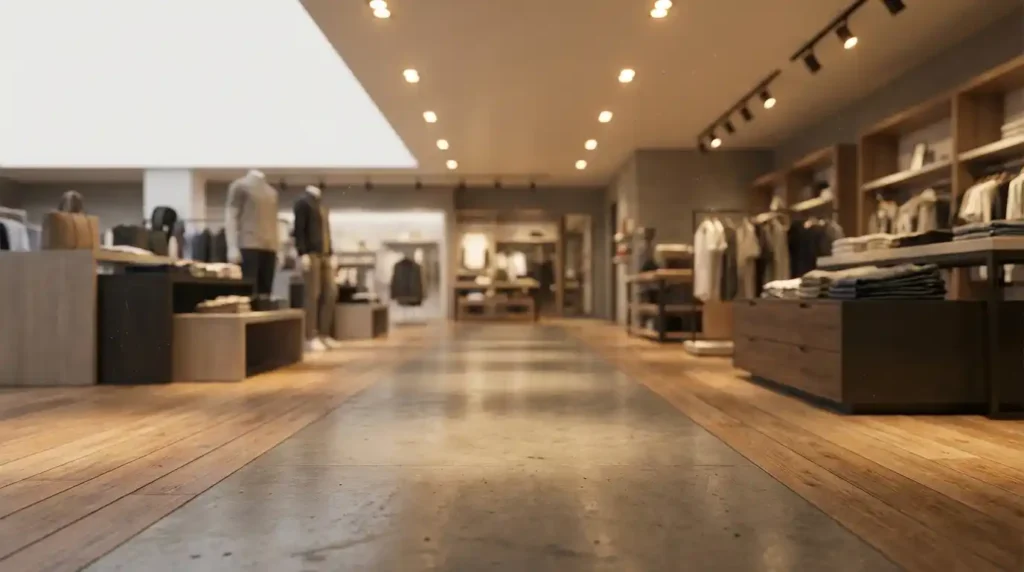

Hotel flooring gets tested in ways that no other commercial environment can replicate. A lobby handles rolling luggage, wet shoes, high heels, and thousands of footsteps per day, while simultaneously being the first thing a guest photographs for their social media. A guest room floor needs to feel warm and quiet underfoot at two in the morning, survive check-out cleaning cycles every 24 hours, and still look fresh after five years of continuous use. A corridor connects everything, absorbs the most foot traffic, and gets the least design attention.
I have been supplying flooring for hospitality projects across Asia, Europe, and the Middle East for over thirty years, and the single most common specification mistake I see is treating the entire hotel as one flooring zone. It is not. Each area has different performance demands, different aesthetic expectations, and different maintenance realities. The right hotel flooring strategy specifies the right material for each zone, not one material for the entire property.
With a U.S. hotel construction pipeline of nearly 6,000 projects as of Q2 2026 and the luxury segment hitting record-high development numbers, getting the flooring specification right has never mattered more. This guide breaks it down zone by zone.
Why Hotel Flooring Deserves Its Own Specification Framework
Most commercial flooring guides treat hospitality as a subcategory of general commercial specification. That approach misses the point. Hotels operate differently from offices, retail stores, or healthcare facilities in three fundamental ways that directly affect flooring decisions.
First, hotels run 24 hours a day, 365 days a year. There is no downtime for deep cleaning or repairs during business hours, because there are no business hours. Flooring maintenance happens between checkout and check-in, in a window that housekeeping measures in minutes, not hours. Second, hotels serve barefoot users. No other commercial environment expects occupants to walk on the floor without shoes, which means comfort, surface temperature, and acoustic performance matter in ways they simply do not in an office or retail store. Third, hotels sell an aesthetic experience. The floor is not a background surface — it is part of the brand. A boutique hotel in Bali and a business hotel in Frankfurt both need durable flooring, but the material, pattern, and finish that reinforces each property’s identity are entirely different.
These three factors — zero downtime, barefoot use, and brand expression — are why hotel flooring requires a specification approach that starts from the guest experience and works backward to the material, rather than starting from the material catalogue and hoping something fits.
Hotel Flooring Zone by Zone
A well-specified hotel project typically involves three to five different flooring materials across its various zones. The table below summarises the key performance requirements by zone before we discuss each one in detail.
| Hotel Zone | Primary Performance Need | Traffic Level | Moisture Exposure | Barefoot Use | Recommended Materials |
|---|---|---|---|---|---|
| Lobby and Reception | Visual impact, durability | Very high | Moderate (wet shoes, umbrellas) | No | Engineered wood, EIR Parquet SPC, stone |
| Guest Rooms | Comfort, acoustics, warmth | Low to moderate | Low | Yes | Engineered wood, carpet, SPC with underlay |
| Corridors | Wear resistance, sound insulation | Very high | Low | No | SPC, high-density laminate, carpet tile |
| Restaurants and Bars | Spill resistance, cleanability | High | High | No | SPC, engineered wood with lacquer finish |
| Bathroom (dry area) | Waterproof, slip resistant | Low | Very high | Yes | SPC, porcelain tile |
| Back of House | Cost efficiency, replaceability | High | Moderate | No | Laminate, high-density laminate, vinyl |
Lobby, Reception, and Public Areas
The lobby is where the brand lives on the floor. This zone demands a material that creates visual impact at scale while handling the highest traffic density in the property. Rolling luggage is the defining stress test — the combination of heavy load on small wheels creates point pressure that weaker flooring materials cannot sustain without indentation or surface damage over time.
For luxury and upper-upscale properties, engineered wood flooring in wide planks or herringbone patterns delivers the authentic warmth and grain variation that reinforce a premium brand position. The ability to refinish the surface extends the floor’s service life across multiple renovation cycles, which matters in a lobby that may see fifteen to twenty years between major refurbishments.
For properties seeking the parquet aesthetic without the maintenance requirements and price point of real wood, EIR Parquet SPC in 600x600mm format offers the visual complexity of classic European patterns with the waterproof, dimensionally stable performance that a high-traffic lobby demands.
Guest Rooms and Suites
Guest room flooring prioritises comfort over everything else. This is where guests walk barefoot, where a dropped phone at midnight should not echo through the room below, and where the floor needs to feel warm and quiet underfoot rather than hard and hollow. Acoustic performance is critical in multi-storey properties — the Impact Insulation Class rating of the floor assembly directly affects guest satisfaction scores, and noise complaints remain one of the most common reasons for negative reviews.
Engineered wood with quality acoustic underlay is the standard choice for upper-tier properties, providing the natural warmth and visual richness that guests expect in a premium room. For mid-tier properties where budget discipline matters, SPC flooring with a cork-backed or IXPE-backed underlay can achieve acceptable comfort levels at a significantly lower cost per square metre. The key is specifying the right underlay thickness — a 1.5mm IXPE backing is adequate for corridors but insufficient for a guest room where barefoot comfort is expected.
Corridors and Circulation Areas

Corridors absorb more cumulative foot traffic than any other zone in a hotel, but they rarely get the specification attention they deserve. The performance requirement is straightforward: the floor needs to resist abrasion from thousands of daily footsteps, absorb impact sound from rolling luggage and housekeeping carts, and maintain its appearance over a five to seven year cycle between corridor renovations.
SPC flooring in wood-look plank format is increasingly the default choice for hotel corridors, offering AC5-equivalent wear resistance, dimensional stability, and fast replacement of damaged planks without disrupting adjacent rooms. For properties using laminate flooring in corridors, specifying AC5-rated products with a high-density HDF core is essential — standard AC3 laminate will show visible wear paths within eighteen months of operation in a busy corridor. Our MoistureShield 1000 with its 1,000 kg/m³ density HDF core addresses both moisture and durability concerns that standard laminate cannot match in hospitality environments.
Hotel Flooring Materials: How to Choose
Engineered Wood: The Premium Choice
Engineered wood remains the material of choice for hotels that position themselves as luxury or upper-upscale. The natural grain variation, the warmth underfoot, and the ability to refinish the surface make it uniquely suited to spaces where the floor contributes to the brand experience. For hotel projects, we typically recommend engineered wood with a minimum 3mm hardwood veneer to allow at least two refinishing cycles over the floor’s service life. Thicker veneers cost more upfront but reduce the total lifecycle cost by extending the interval before full replacement becomes necessary. Our Burmese teak flooring is particularly suited to high-end hospitality projects in tropical climates, where natural moisture and pest resistance provide additional performance advantages.
SPC: The Performance Workhorse
SPC flooring has become the material that hotel operators specify when they want resilient performance without the price point of engineered wood. Its complete waterproofing, dimensional stability, and compatibility with underfloor heating systems make it versatile enough to work across lobbies, corridors, guest rooms, and restaurant areas. The latest generation of EIR (Embossed in Register) SPC products has closed much of the visual gap with real wood, aligning the printed texture with the surface embossing to create a convincingly three-dimensional wood grain. For our recent comparison of how SPC stacks up against other hard flooring options in commercial settings, see our SPC vs laminate flooring guide.
Laminate and High-Density Laminate: The Budget Play
Standard laminate has a limited role in hotel specification because its HDF core is vulnerable to moisture at the joints — a significant liability in environments where spills, wet cleaning, and bathroom adjacency are daily realities. However, high-density laminate products with 1,000 kg/m³ HDF cores have changed this equation. These products offer moisture resistance that approaches SPC levels while maintaining laminate’s cost advantage and the wide range of decorative patterns available. For back-of-house areas, staff corridors, and budget-tier properties, high-density laminate delivers the best balance of cost efficiency and performance durability. For a detailed breakdown of how engineered wood and laminate compare in commercial specification, see our engineered wood vs laminate guide.
Performance Criteria That Drive Hotel Flooring Decisions
Acoustic Performance
Acoustic performance is the most underspecified aspect of hotel flooring, yet it directly drives guest satisfaction scores. Sound transmission through floors is the invisible factor that makes or breaks guest satisfaction. The two metrics that matter are Impact Insulation Class, which measures how much impact sound (footsteps, dropped objects) the floor assembly blocks from transmitting to the room below, and Sound Transmission Class, which measures airborne sound. Most hotel brands specify a minimum IIC rating of 50 for guest room floors, with luxury properties targeting 55 or above. The WELL Building Standard’s Sound concept also addresses acoustic comfort in hospitality environments, reinforcing the importance of floor assembly performance in overall guest wellbeing. Achieving these ratings depends as much on the underlay system as on the flooring material itself — a 2mm cork underlay under engineered wood can improve IIC performance by 15 to 20 points compared to the same floor direct-glued to the subfloor.
Moisture and Cleaning Chemical Resistance
Hotel floors encounter water and cleaning chemicals daily. Guest room floors get damp-mopped between every checkout. Corridor floors are machine-scrubbed weekly. Lobby floors face wet shoes, spilled drinks, and tracked-in rain. The flooring material’s resistance to both water penetration and the alkaline cleaning solutions used in commercial housekeeping is a specification criterion that many first-time hotel developers overlook. SPC and porcelain tile handle both without degradation. Engineered wood requires pH-neutral cleaners and prompt spill removal. Standard laminate’s HDF core can swell irreversibly if cleaning water penetrates the click-lock joints — one reason why high-density laminate or SPC is preferred over standard laminate in hospitality environments.
Fire Rating and Regulatory Compliance
Fire safety regulations for hotel flooring vary by jurisdiction but typically require materials to meet minimum flame spread and smoke development standards. In the United States, most building codes require commercial flooring to achieve a Critical Radiant Flux of at least 0.45 W/cm² under ASTM E648 testing. European projects reference the EN 13501-1 classification system, where most hotel specifications require a minimum of Bfl-s1 (floor covering) or B-s1,d0 (for broader building material classification). Both SPC and laminate products typically meet these requirements, but verification through test certificates should be part of every specification package. Our products carry CE certification with verified fire performance data.
Design Trends Shaping Hotel Flooring in 2026

The AHLA’s 2026 State of the Industry report projects hotel guest spending of nearly $805 billion this year, with luxury and upper-upscale development at record highs. This investment wave is driving several hotel flooring design trends that specifiers should understand.
Herringbone and parquet patterns are returning to hotel lobbies and public areas, driven by the broader hospitality design trend toward heritage aesthetics and European visual references. With luxury hotel development at record highs and conversions reaching an all-time pipeline of over 1,500 projects in Q2 2026, the demand for distinctive flooring that differentiates properties from their competitors has never been stronger. The difference from previous cycles is that these patterns are now available in SPC and high-density laminate formats, not just solid or engineered wood, making them accessible to mid-tier properties that could not previously justify the cost of real wood parquet installation.
Warm wood tones — honey oak, walnut, and teak — continue to dominate guest room specifications, replacing the cool greys that defined hotel design from 2018 to 2023. Wider planks and longer formats are preferred for lobby and public area installations, where the scale of the floor demands visual proportion. For a broader perspective on flooring design directions, our laminate flooring trends 2026 article covers pattern and format developments across the industry.
| Design Trend | Where It Shows Up | Material Options | Budget Impact |
|---|---|---|---|
| Herringbone and parquet patterns | Lobby, reception, feature areas | Engineered wood, EIR Parquet SPC | Moderate to high |
| Warm wood tones (honey, walnut, teak) | Guest rooms, suites, restaurants | Engineered wood, SPC, laminate | Low to moderate |
| Wide and long plank formats | Lobby, corridors, public areas | Engineered wood, SPC | Moderate |
| Matte and ultra-matte finishes | Guest rooms, wellness areas | Engineered wood, EIR SPC | Low |
| Zone transitions as design features | Lobby to corridor, room to bathroom | Mixed materials with visible transition strips | Low |
Frequently Asked Questions
What is the best flooring for hotel lobbies?
For luxury properties, engineered wood in wide plank or herringbone format delivers the premium aesthetic and long-term refinishing potential that justifies the investment. For mid-tier hotels and properties prioritising operational efficiency, SPC flooring with an EIR finish provides excellent durability and visual realism at a lower cost. The material choice should align with the property’s brand positioning — a boutique hotel and a business hotel have different lobby requirements even if they share the same star rating.
How often should floors be replaced in a hotel?
This depends entirely on the material and the zone. Engineered wood in guest rooms can last 20 to 30 years with one or two refinishing cycles during that period. SPC in corridors typically maintains acceptable appearance for 10 to 15 years under heavy traffic. Standard laminate in high-traffic zones often shows visible wear within 5 to 7 years. Most hotel brands plan flooring replacement as part of their property improvement programs on a 7 to 12 year cycle, though this varies by brand tier and market positioning.
Is SPC flooring suitable for five-star hotels?
In specific zones, yes. SPC is not a substitute for real wood in a luxury guest room where barefoot comfort and natural warmth define the experience. But in lobby areas, corridors, restaurants, and bathroom dry zones, the latest generation of EIR SPC products delivers visual and performance quality that meets five-star specification requirements. The zone-by-zone approach — engineered wood where guests notice the material, SPC where they notice the performance — is increasingly how luxury properties balance brand standards with operational budgets.
What acoustic rating should floors in hotels achieve?
Most international hotel brands specify a minimum Impact Insulation Class of 50 for guest room floor assemblies, with luxury brands targeting IIC 55 or higher. Achieving these ratings requires attention to the underlay system as much as the flooring material. A 2mm cork or 1.5mm IXPE underlay under floating floors typically provides 15 to 20 points of IIC improvement. For glue-down engineered wood installations, an acoustic membrane between the subfloor and the adhesive layer achieves similar results. Always verify IIC performance using the complete floor assembly, not just the flooring material in isolation.
How does hotel flooring specification differ from standard commercial?
Three ways. First, hospitality flooring must perform under barefoot use — surface warmth, texture, and acoustic softness matter in ways they do not in offices or retail. Second, hotels have essentially zero maintenance downtime; flooring must withstand daily wet cleaning without performance degradation. Third, the floor is a brand asset, not just a functional surface — the material specification must support the property’s market positioning, which means different materials for different zones within the same project. Standard commercial flooring guides rarely address these hospitality-specific requirements.
Conclusion: Start from the Guest, Not from the Catalogue
The best hotel flooring specifications I have seen in thirty years of distributing flooring for hospitality projects all share one characteristic: they started with the guest experience and worked backward to the material, not the other way around. What does the guest see when they walk in? How does the floor feel underfoot at two in the morning? What does it sound like when luggage rolls across it? These questions lead to better material choices than starting with a product catalogue and trying to make one material work everywhere.
The zone-by-zone approach this guide outlines is not complicated, but it requires a supplier who can provide multiple material categories — engineered wood, SPC, laminate, high-density laminate — through a single point of contact with consistent documentation and certification across every product. That is exactly how Karlyn Floors works with hospitality clients. If you are specifying flooring for a hotel project and want to discuss material options, samples, or pricing across zones, reach out to our team.